
Pain themes with frequency
Which problems come up constantly and which are one loud review — the difference matters.
Pain points written in a workshop describe the team’s theory. Segmentable collects what buyers in your category actually say goes wrong — in their words, with frequencies, and with the source behind every quote.
Brief in 10 minutes · assembly in ~2 hours · every number clicks through to its source
A pain point is the specific thing that goes wrong for a buyer often enough that they will pay to stop it. Getting these right decides whether messaging lands or slides off: the same product described against a real pain converts, and described against an imagined one does not.
The usual way to produce them is a workshop, and the usual result is a list of pains the team finds plausible — which is to say, the pains the current product already addresses. It is a closed loop. Anything the team has not thought of cannot appear on the list, because nothing outside the room ever entered it.
Segmentable opens the loop. It collects public material where your market complains — reviews, community threads, comparison pages, support discussions — and groups it into themes with frequencies and sentiment. You see which pains are loud, which are common, and which are severe enough that people switch vendors over them.
Which problems come up constantly and which are one loud review — the difference matters.
How this audience describes the problem, which is the wording that makes copy work.
Which pains annoy and which ones actually make people leave a vendor.
What hurts differs by group — the map shows which pain belongs to whom.
What stops a purchase and what pushes it through, alongside the pain itself.
Every theme opens into the real reviews and posts it was built from.
The system identifies your market and the players in it.
Reviews, communities, comparison pages and support threads become the corpus.
Grouped pains with frequency, severity and quotes you can open.
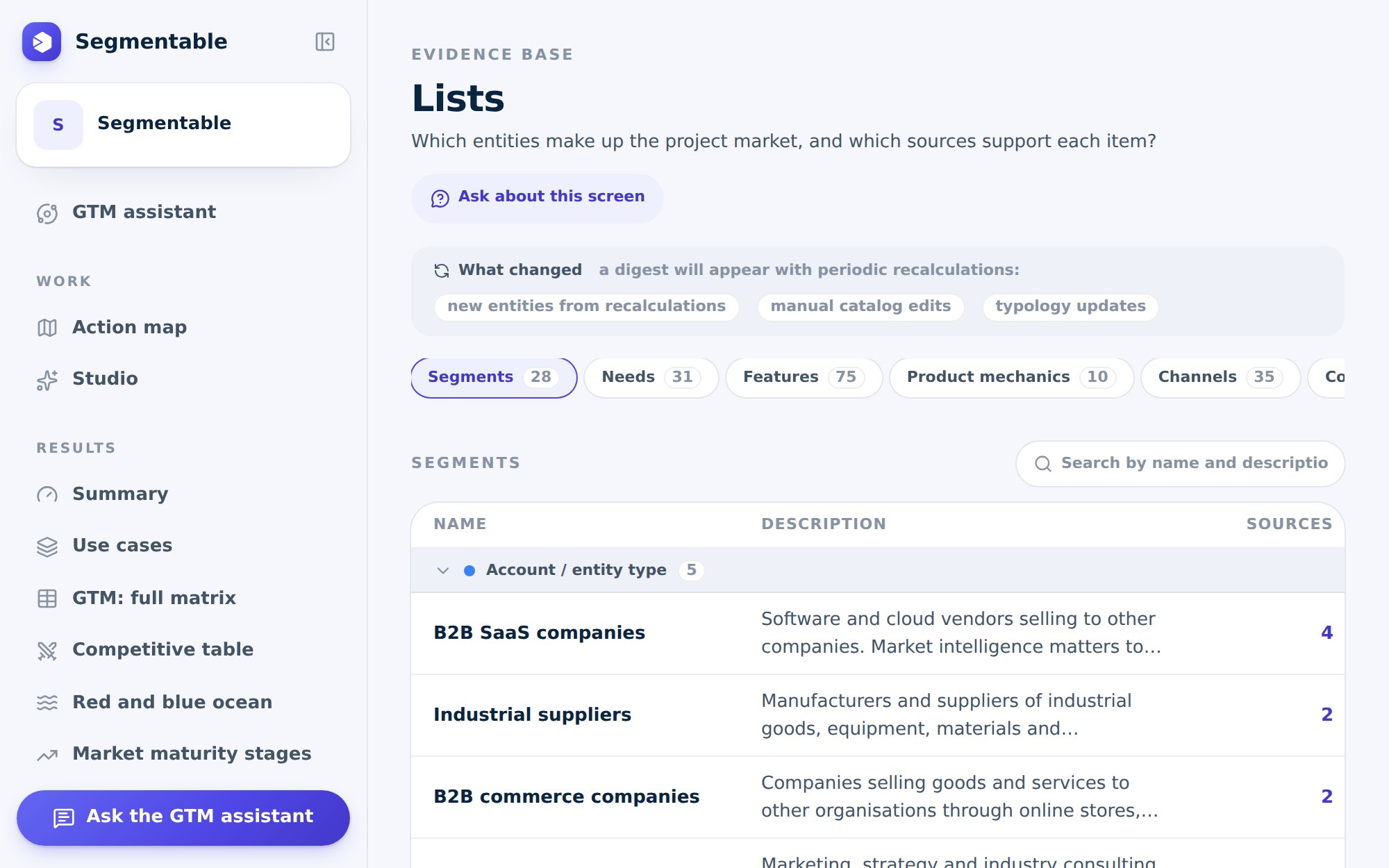
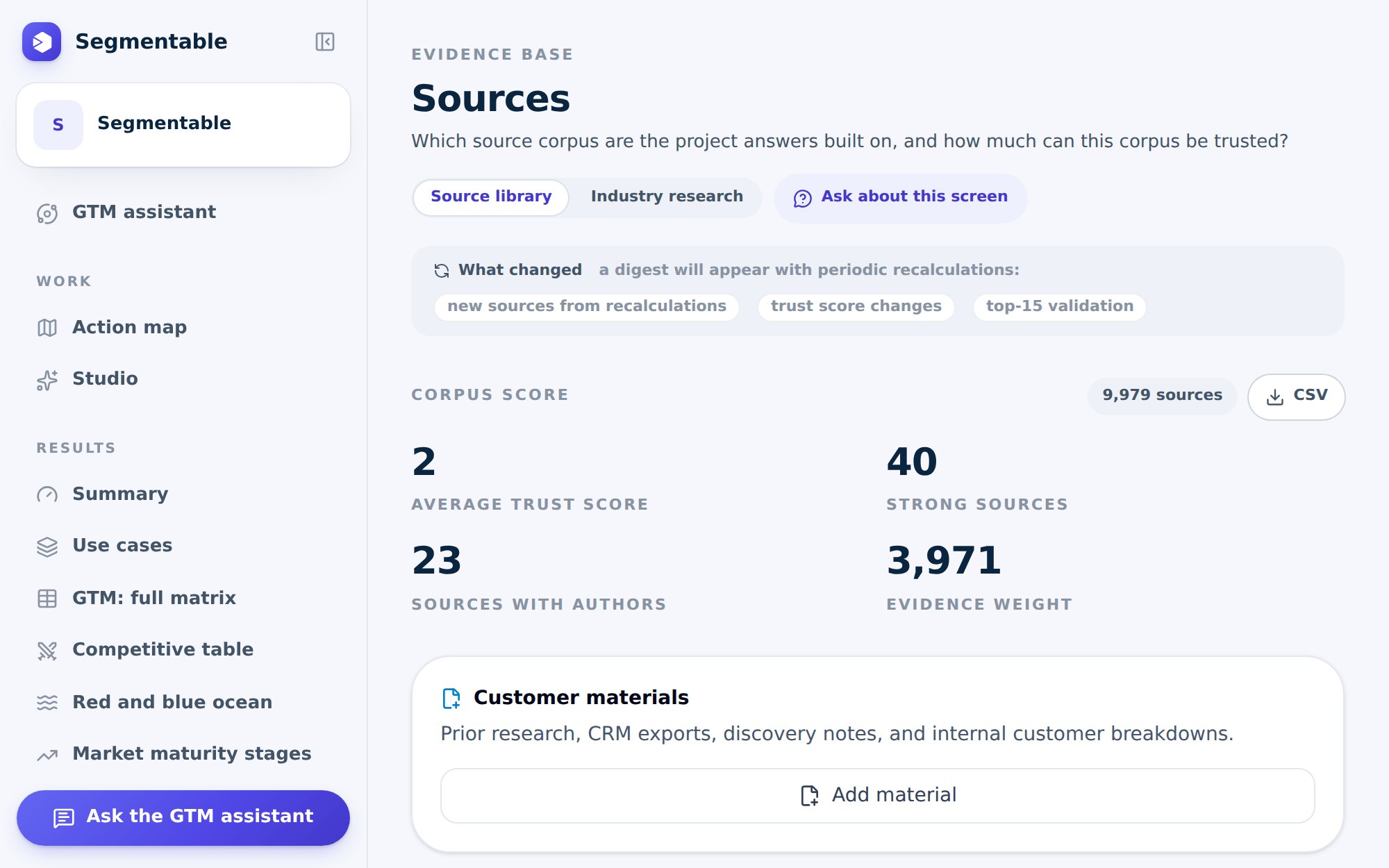
Real product screens, not mockups.
The copy needs the words buyers actually use, not the words the team likes.
Severity data separates what annoys from what makes people churn.
A similar situation →You need to know which pain is sharp enough that someone will pay today.
A similar situation →| Segmentable | By hand | Agency | ChatGPT | |
|---|---|---|---|---|
| Source of pains | What buyers publicly say | What the team assumes | Interviews with a small sample | Model memory |
| Frequency data | Yes, per theme | No | Sometimes | No |
| Verifiability | Quote and source per theme | None | Partial | None |
| Time | ~2 hours | A workshop | 3-6 weeks | Minutes |
The fastest way in: a one-off analysis of what buyers complain about across your competitors, with themes, frequencies and quotes.
from $12 · we set it up with you
From public material where your market talks: customer reviews, community threads, comparison pages and support discussions. The source list is visible in the report.
By frequency and severity rather than volume. A theme that appears constantly across hundreds of reviews behaves differently from one review written in capitals, and the report separates them.
It makes them sharper. You walk into interviews already knowing the common themes, so the conversation is spent on why and how much rather than on discovery.
Then the frame widens to adjacent and reference markets, and the report states plainly how thin the corpus is instead of presenting a weak signal as a strong one.
The review-based analysis starts at $12. A full market model with segments, pains and channels starts at $79. Dollar checkout is not open yet, so we set the first run up with you directly.
Yes. A re-run shows which themes competitors have fixed and which have been hurting for years — often the most useful thing in the report.
Describe your product or just give us a link to your site — the system will collect the data and answer the question behind your task.