Main analysis conclusion
Each analysis starts with a management answer, not a table: what it means for the decision. Below are the map, exceptions, and matrix the conclusion is built from.
The main difference between Segmentable and AI essays is the trust mechanics. Any conclusion can be unpacked downward: analysis → evidence table → source with trust score → methodology. You can take this to the board.
Every screenshot below is a live project: the market research for Segmentable itself
A skeptic checks not only conclusions, but how they were produced. That is why every layer is open: from management answer down to raw material and methodology.
Each analysis starts with a management answer, not a table: what it means for the decision. Below are the map, exceptions, and matrix the conclusion is built from.
Under every chart there is an evidence table. Clicking a number reveals which mentions produced the metric and how it was calculated: stability, seasonality, confidence.
7,500+ sources with trust score and evidence weight. Any conclusion can be unpacked down to the specific fragment it was built from, with source-trust evaluation.
Every analysis has an open methodology: what was calculated, from what, and where the limits of applicability are. Honest limitations instead of polished promises.
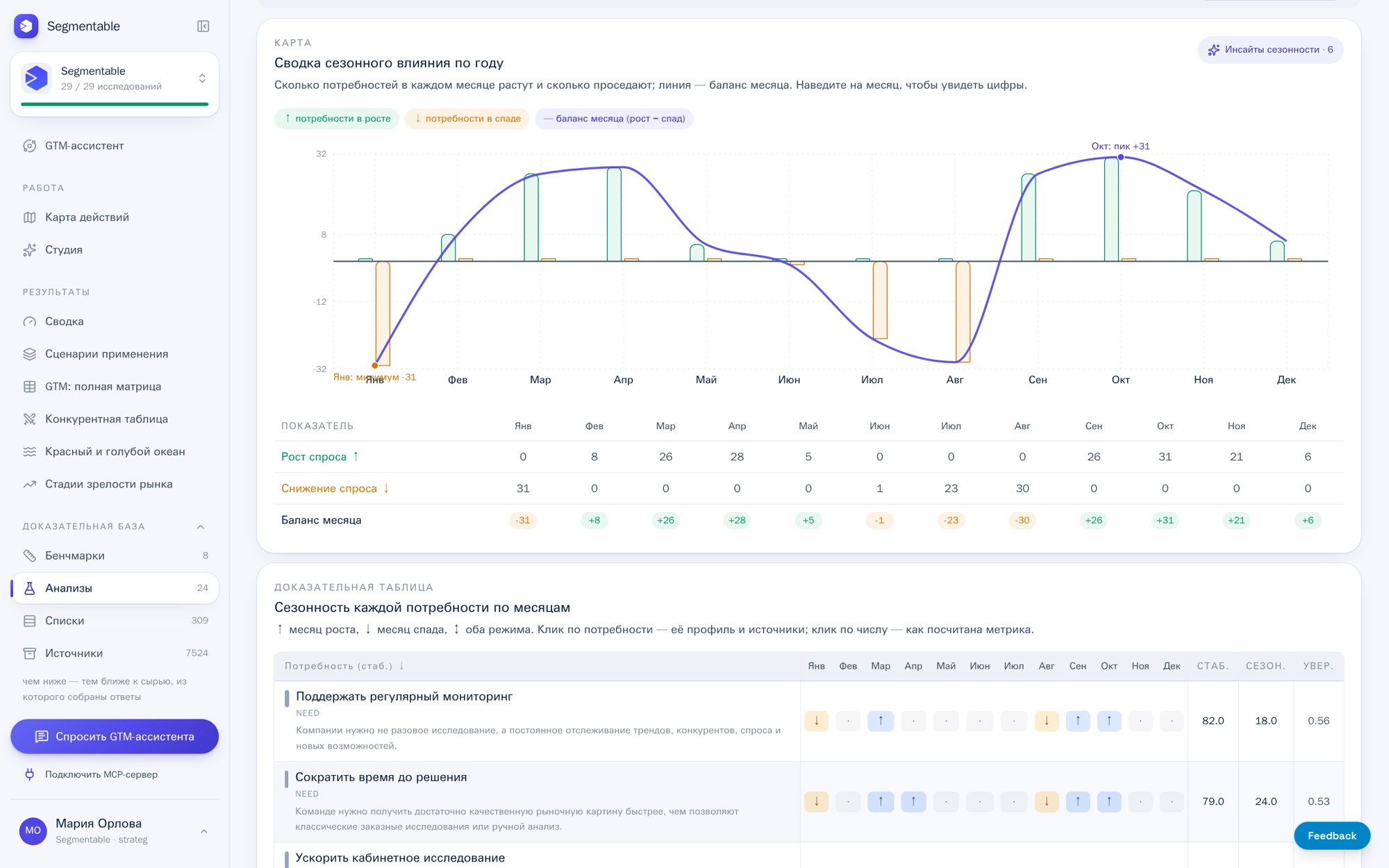
Seasonality of each need by month: click a need for profile and sources, click a number to see how the metric was calculated.
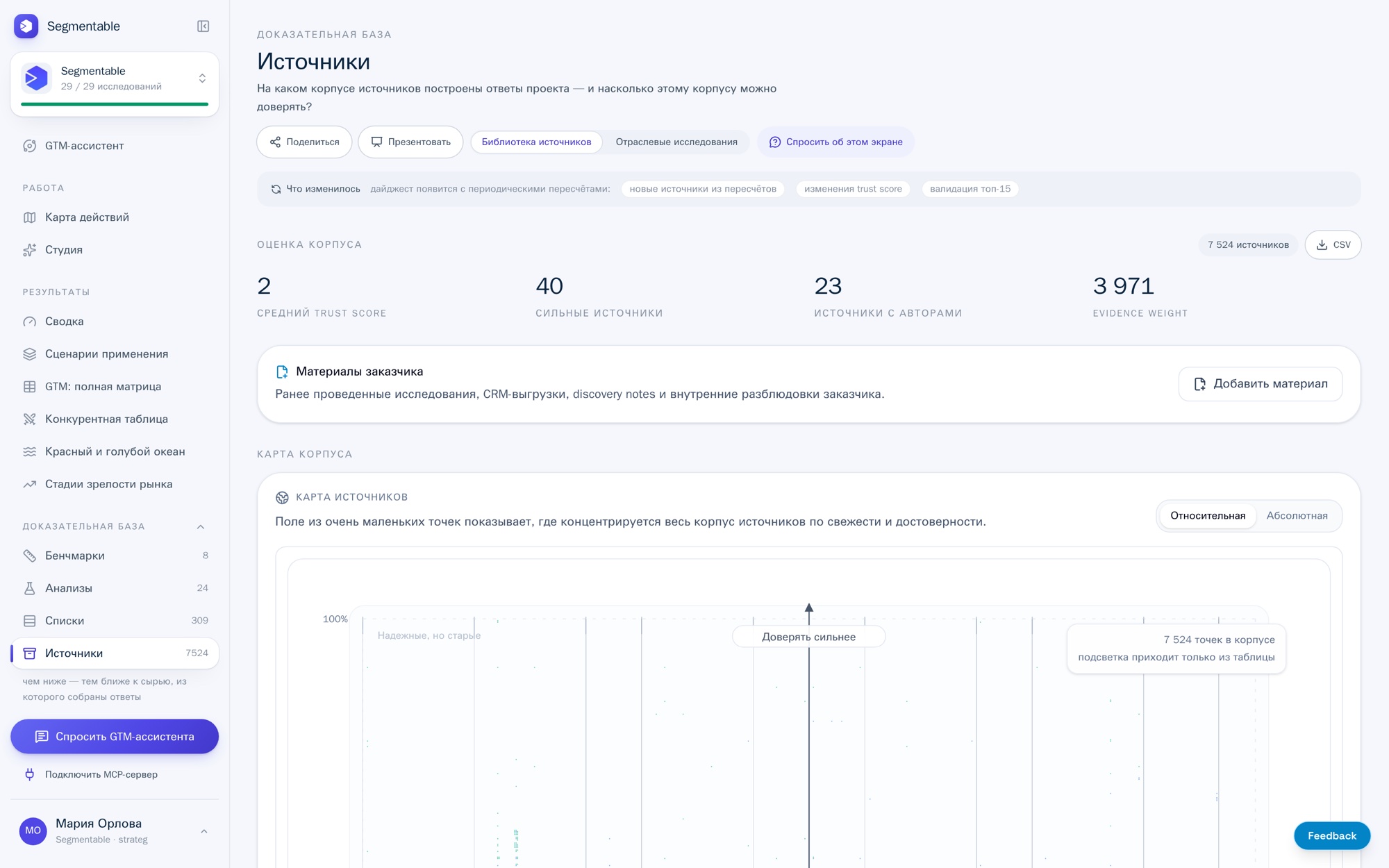
Corpus assessment: strong sources, evidence weight, freshness and reliability map. Customer materials are connected as a separate layer.
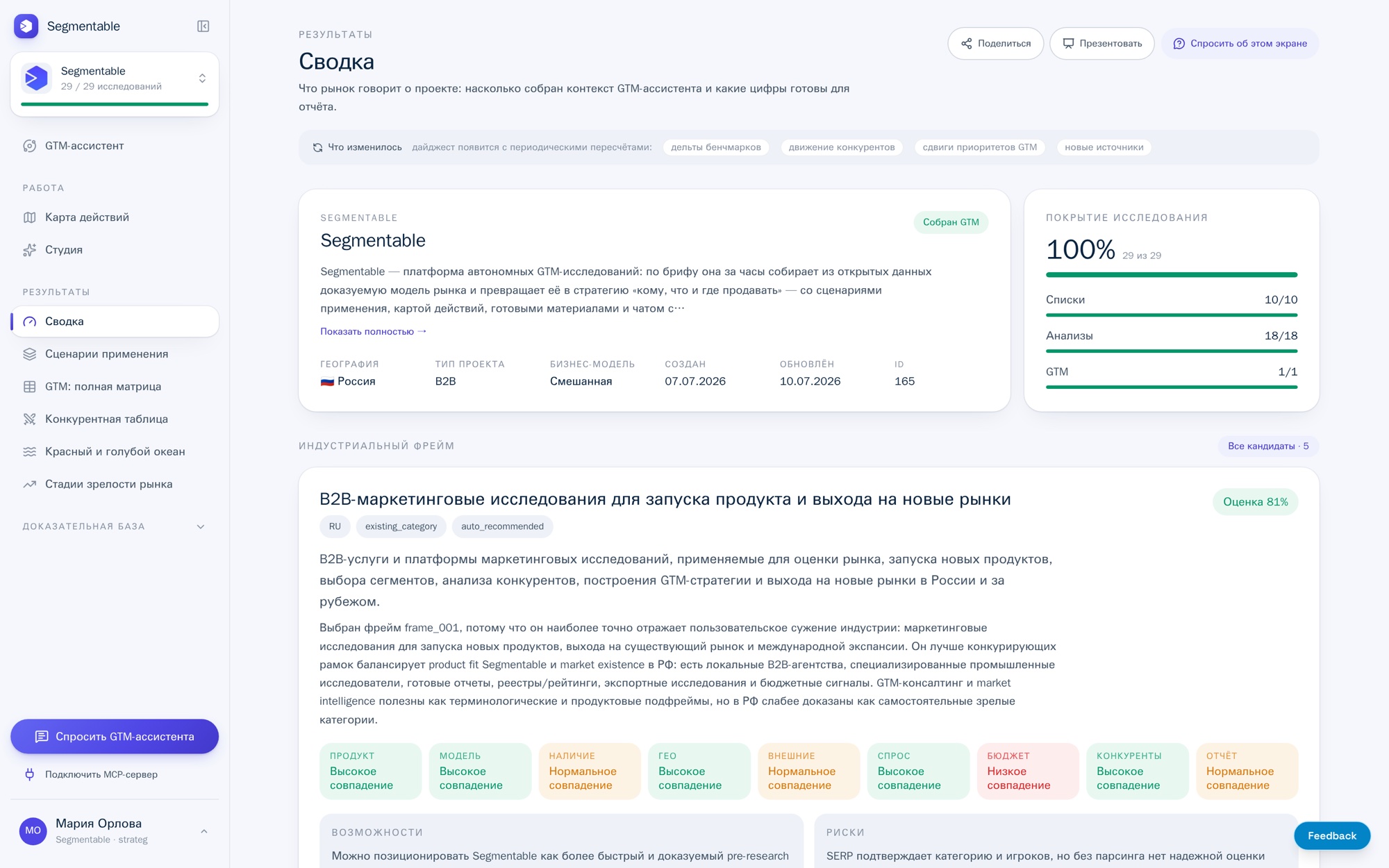
Industry frame with match scoring across 9 axes, opportunities and risks — it is clear what each conclusion stands on.
Segmentable research before launch aligned very well with what we later found in in-depth interviews after release.
Press: GTM strategy for Laser Systems JSC and GigaChat — Interfax →
Build a project and click any number: analysis → table → source. Skeptics like this part most.
Every conclusion links to its primary source: a page, a review, a publication. Verification takes seconds — nothing has to be taken on faith.
From open market sources: company websites and materials, customer reviews, job postings, media, catalogs. Nothing private or personal.
Coverage is visible in every project: how many sources were collected and of what type. If a market has little data, you see it before relying on conclusions.
It can, like any method. The difference is that errors can be found: sources are open, calculations traceable. Unverifiable confidence is more dangerous than verifiable imprecision.